Glow |
Menstrual Support App
THE PROBLEM
THE PROCESS
01. Empathize
02. Define
03. Ideate
04. Prototype
05. Test
HAND-OFF
MEASURING SUCCESS
NEXT STEPS
Social Media Hashtag Audit
User Interviews
Secondary Research
User Flow
Wireframes
Brand Identity
Prototype
User Testing
Information Architecture
Logo drafts:
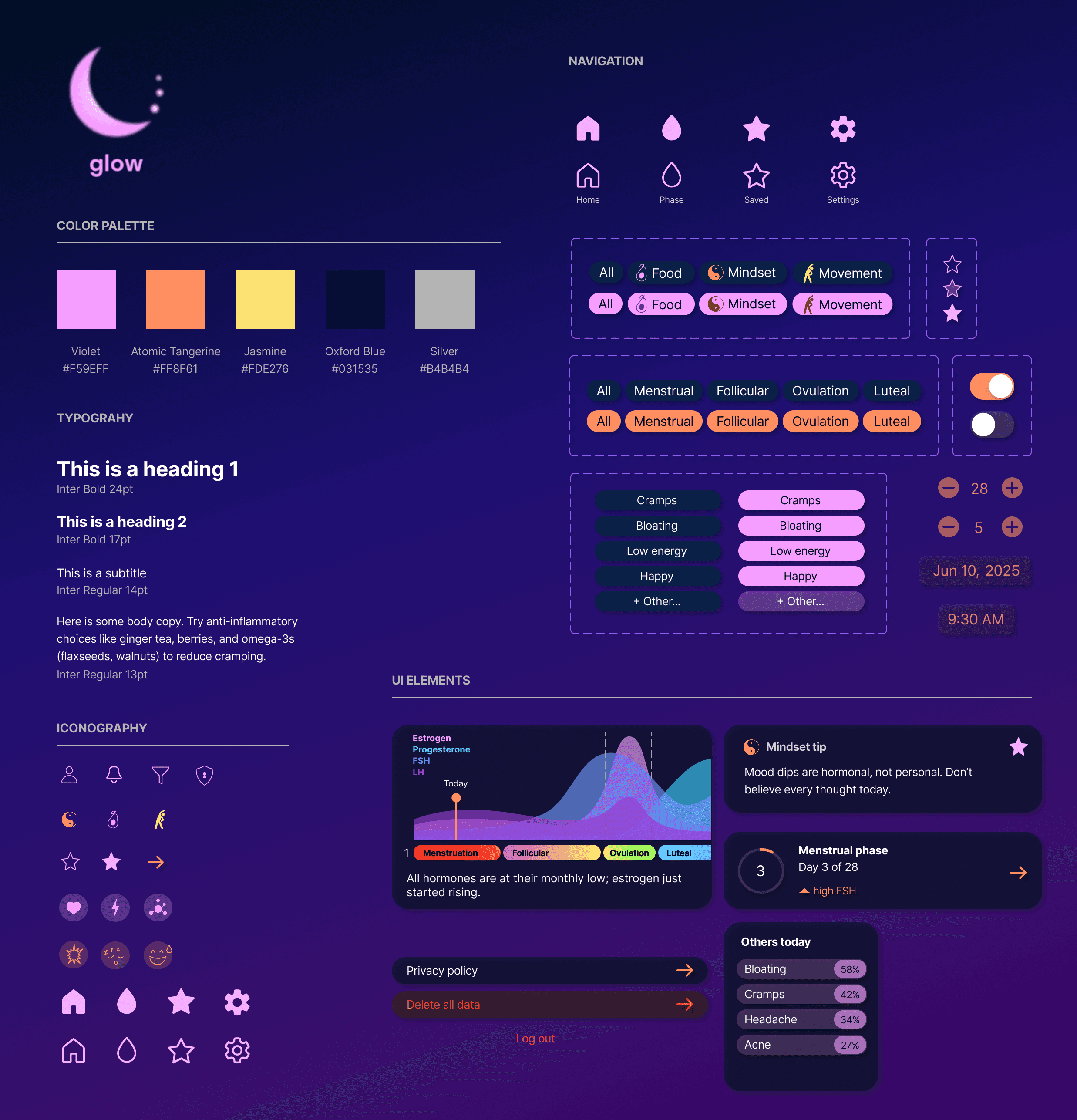
A kit was created for future members to use as a reference for X UI elements.
Final logos:
Personas
ROLE
PROJECT DURATION
UI / UX Designer
6 weeks
DELIVERABLES
Wireframes, High-fidelity Prototype, Branding Kit
01. EMPATHIZE
02. DEFINE
03. IDEATE
04. PROTOTYPE
05. TEST
2025
Young menstruators balancing studies or early careers struggle to align daily habits with hormonal changes. Current apps and scattered social media tips lack concise, evidence-based, phase-specific guidance, leading to recurring energy crashes, mood instability, and reduced performance.
Analyzed top TikTok hashtags (#cyclesyncing, #periodtips) with 500M+ combined views
Found high interest but inconsistent or unverified advice
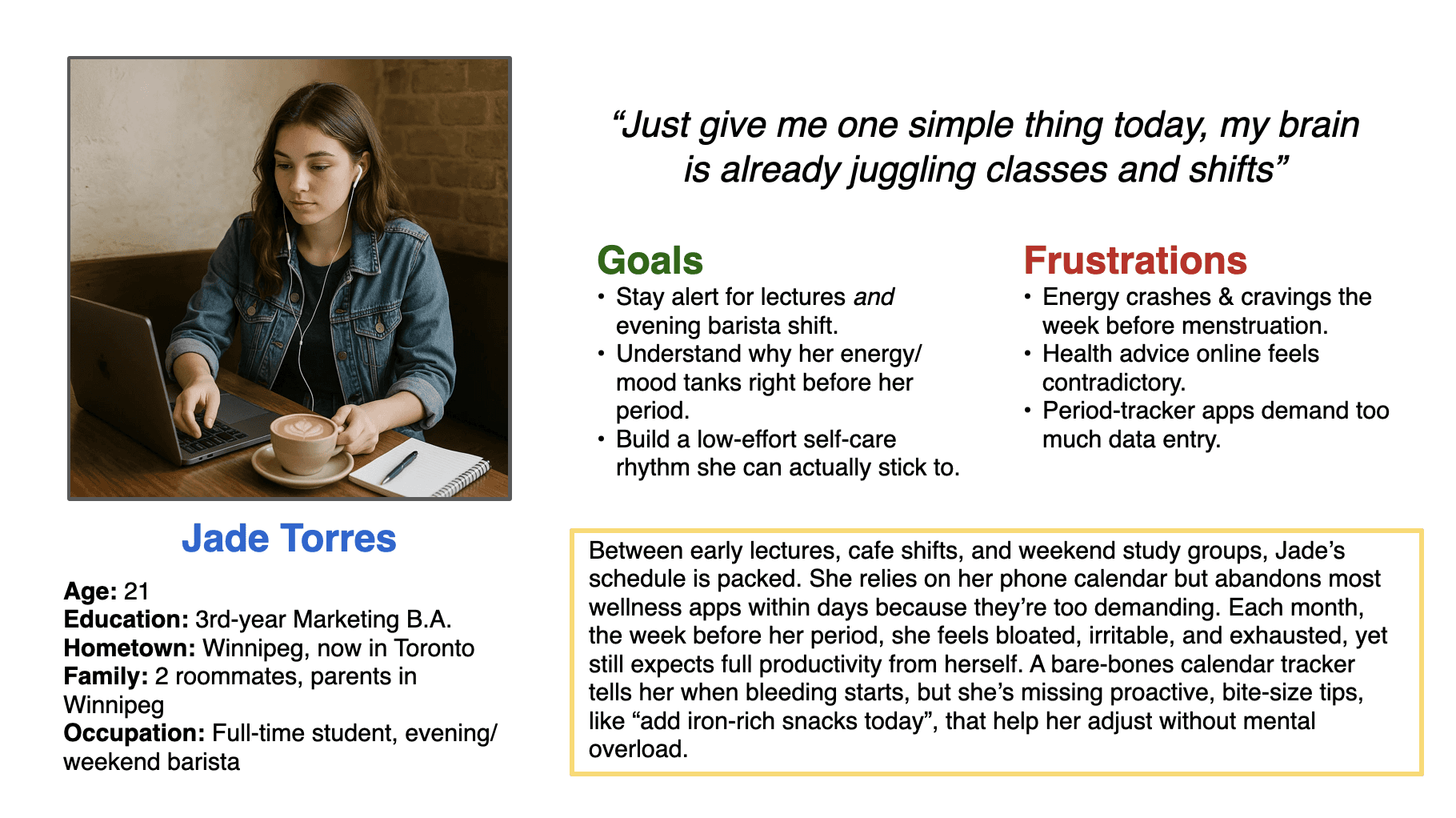
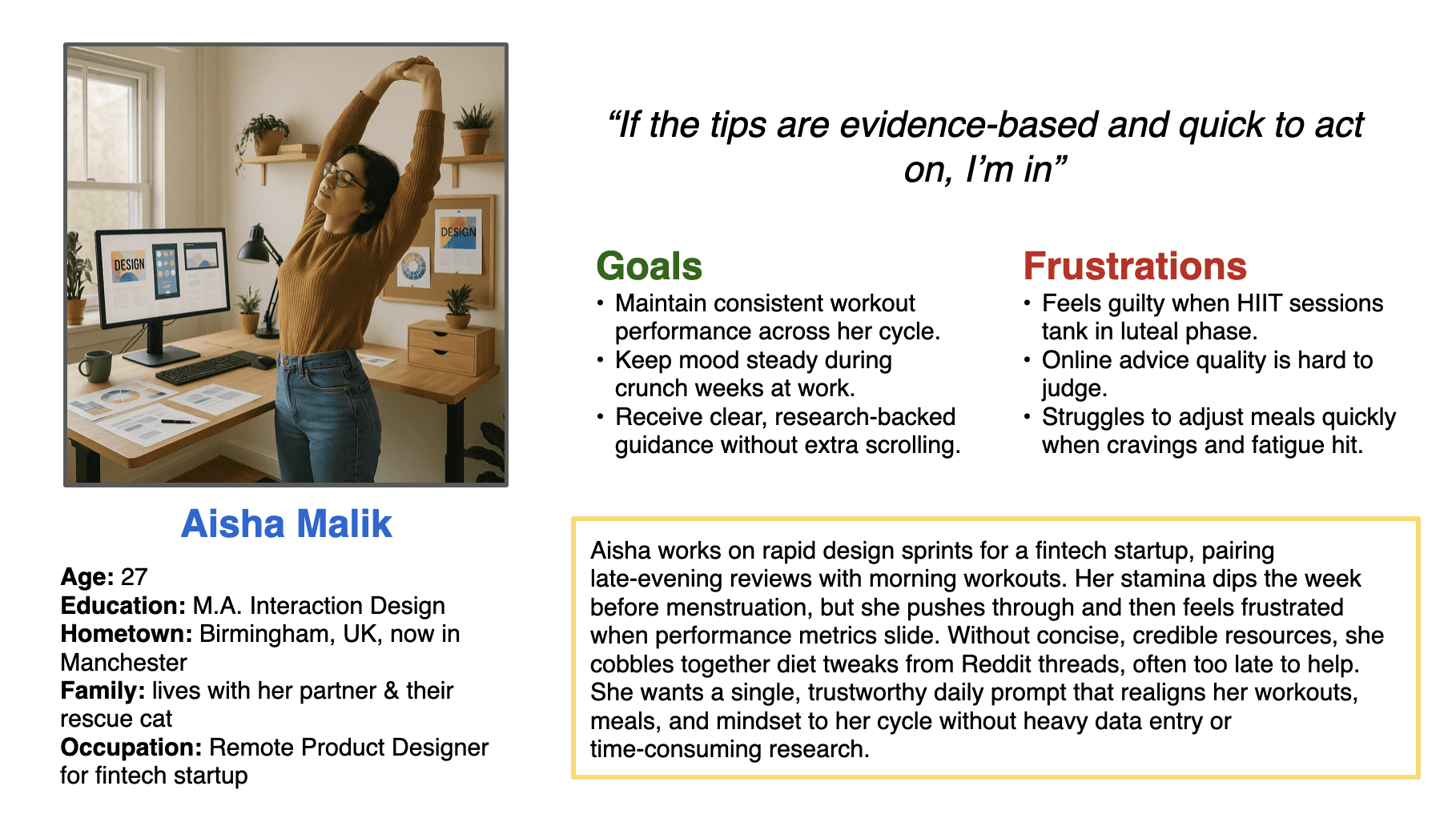
Created two representative personas based on user interviews and research: Jade, a student managing coursework and health, and Aisha, a remote worker balancing professional demands with well-being. Both want quick, credible, phase-specific guidance but struggle with inconsistent information, complex tracking apps, and decision fatigue.
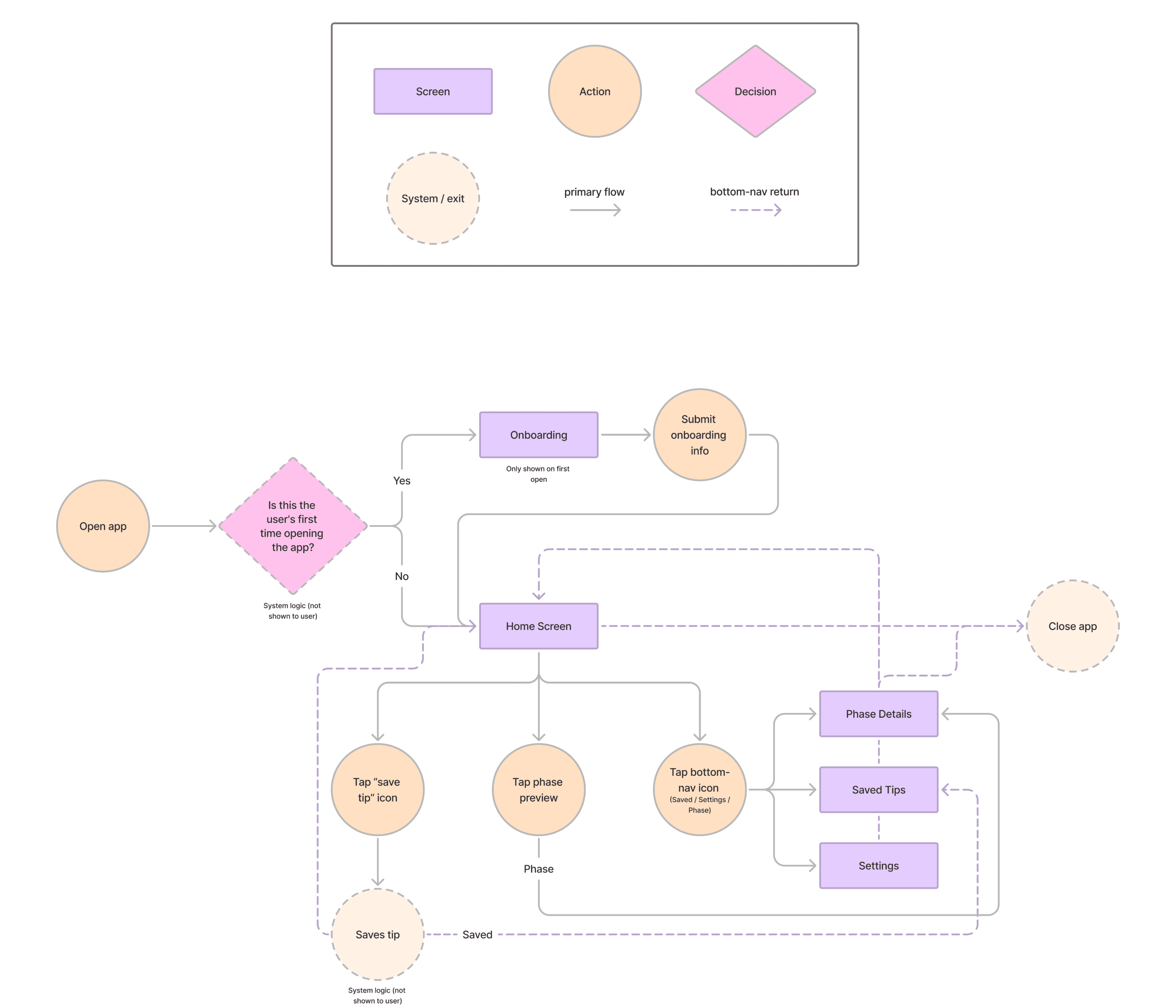
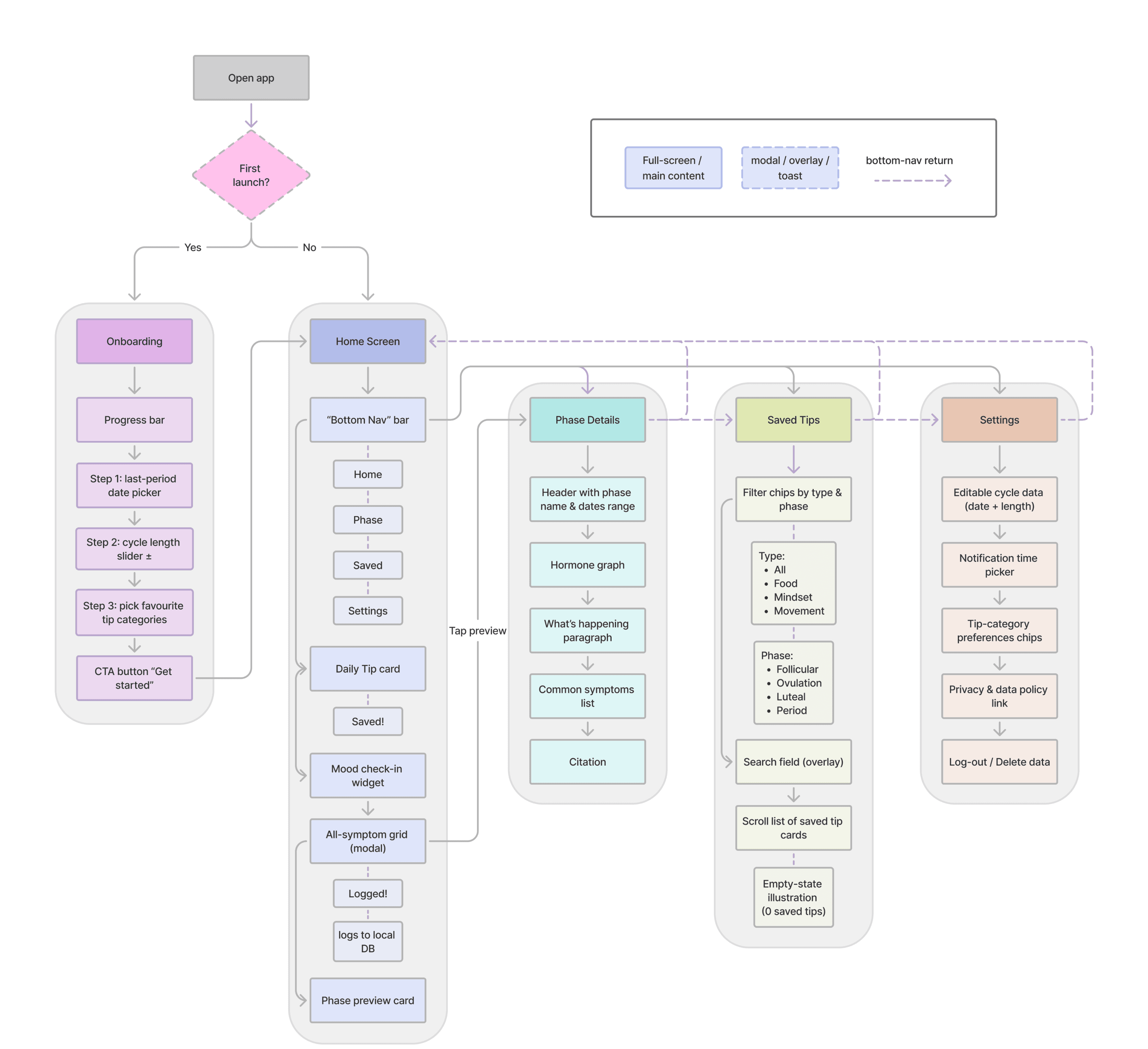
Mapped a streamlined user flow and information architecture to give quick access to daily tips, phase insights, and saved content while keeping navigation intuitive.
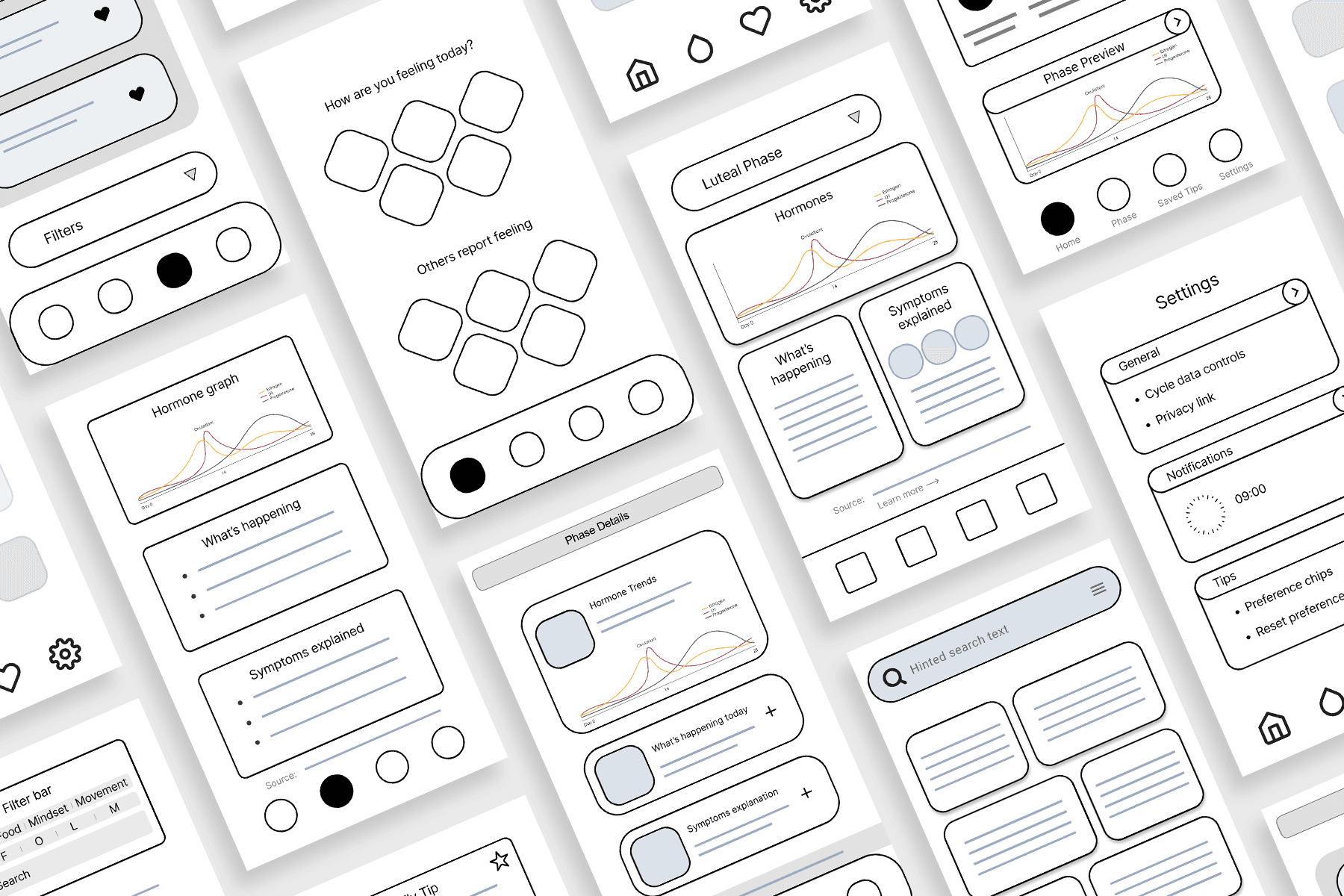
Explored four variations of wireframes to refine layout, hierarchy, and navigation.
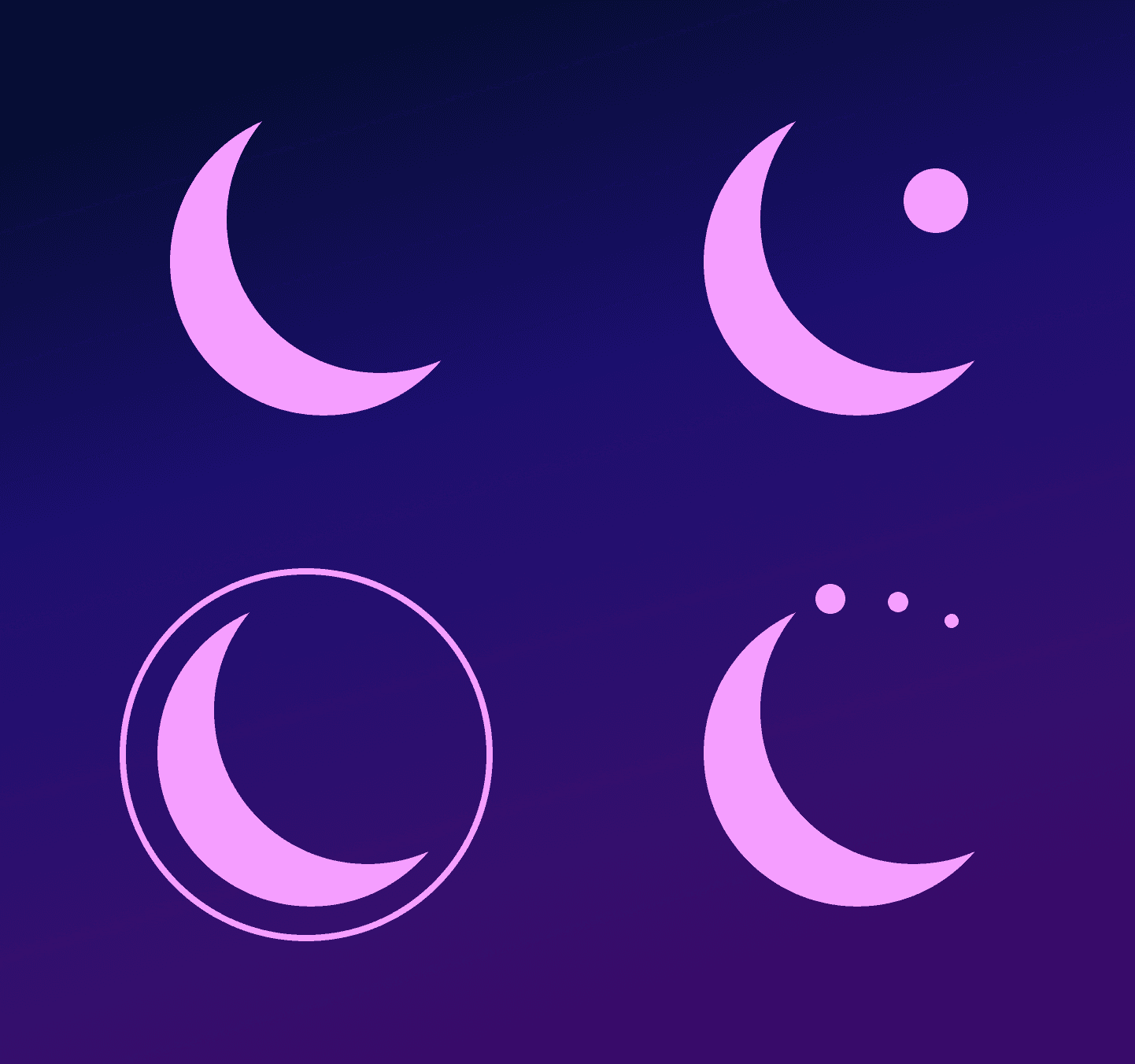
Developed logo concepts reflecting the app’s calm, supportive tone.
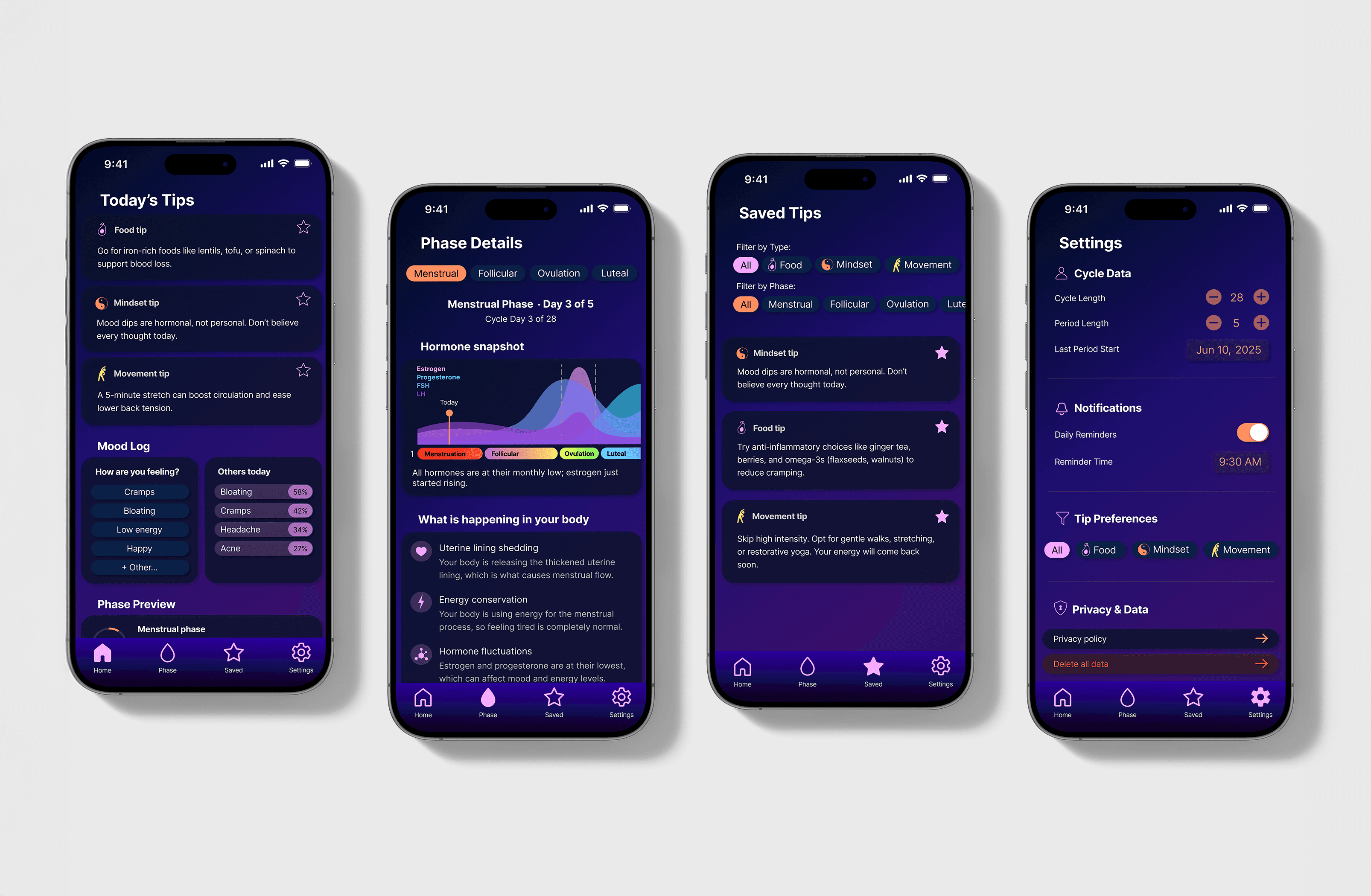
Developed brand identity and high-fidelity prototype with finalized palette, typography, and UI components, simulating real-world use for testing.
Conducted a heuristic evaluation on an earlier high-fidelity prototype using Nielsen’s principles to assess navigation, hierarchy, and clarity.
Feedback led to fixes in the MVP final design, including labeled navigation icons, improved contrast, clearer grouping, and a plan to simplify the Phase Details page in a future iteration.
While the app has not launched, success would be measured through adoption, engagement, and satisfaction metrics.
Key indicators would include:
Adoption Rate: % of users completing onboarding in the first week
Engagement: Daily active users and frequency of viewing daily tips or Phase Details
Task Success Rate: Ability to save and retrieve tips without assistance
Retention: Returning users at 1 week, 1 month, and 3 months
User Satisfaction: Ratings for ease of use, clarity, and usefulness of guidance
These metrics directly align with the problem statement, focusing on whether users can easily access and act on credible, phase-specific guidance in their daily routines.
01. Simplify Phase Details page.
02. Add adaptive content personalization based on user activity, preferences, or
symptoms.
03. Build in-app feedback loop.
KEY LEARNINGS
This project highlighted the need to balance content depth with clarity, especially on the Phase Details page, where complex information risked overwhelming users. Testing reinforced the value of early iteration and small accessibility tweaks, like navigation labels and improved contrast, which can have a big impact. Overall, it strengthened my ability to turn user insights into clear, intuitive design decisions.
Conducted interviews with target users (young menstruators, ages 18–30) to understand how hormonal cycle changes impact daily routines.
Confirmed need for concise, credible, phase-specific guidance
Identified frustration with information overload
Reviewed academic and credible health sources on menstrual cycle phases and hormone impacts
Identified nutritional, movement, and mood-care strategies aligned with each phase
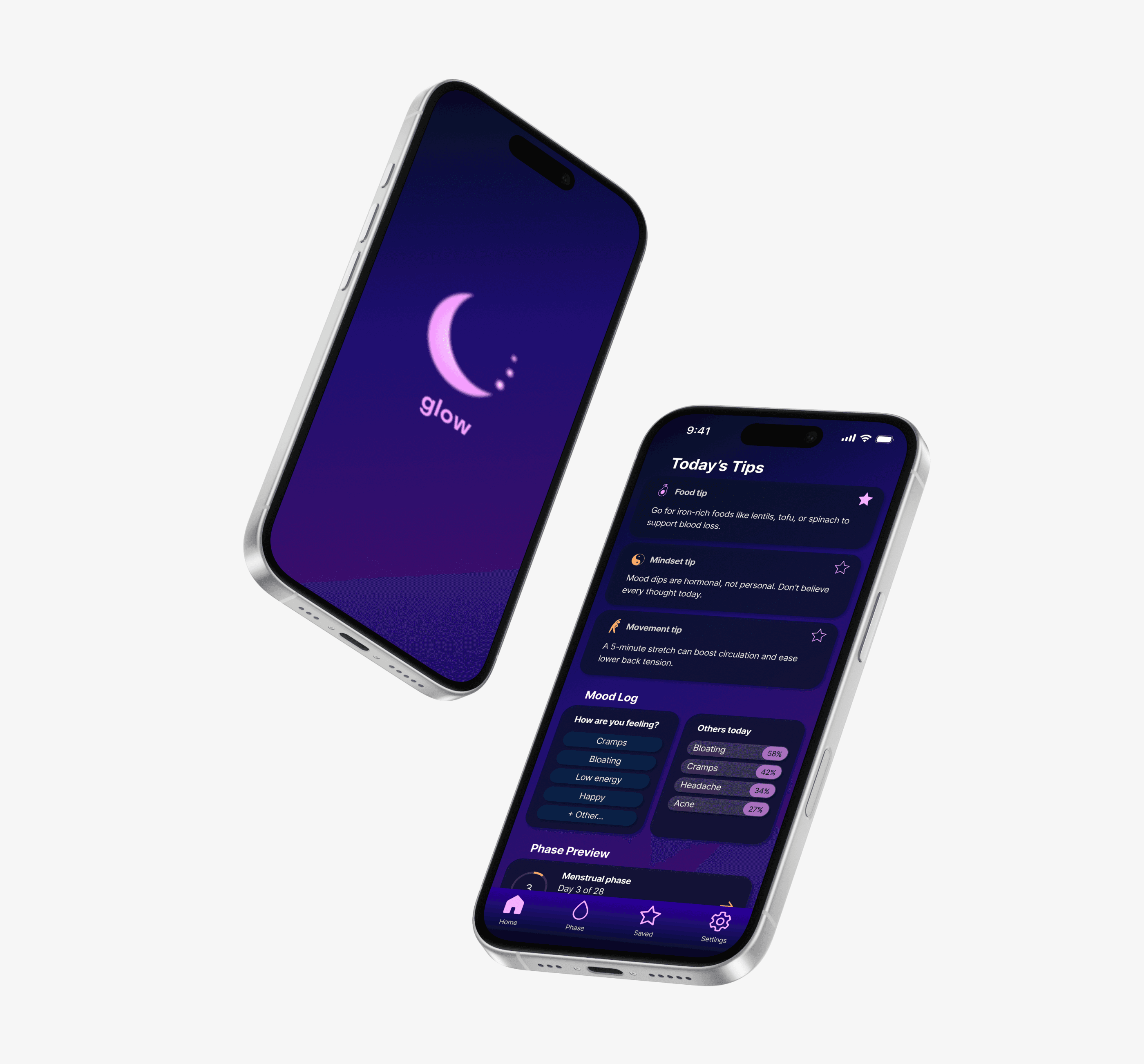
A mobile wellness app that provides daily, science-backed tips for food, movement, and mindset aligned with the user's menstrual cycle.

Figma
Illustrator
User Research
Information Architecture
Prototyping
Usability Testing